
Building an Integrity-Based Culture: Leadership Lessons From Biblical Examples
Leadership transcends strategy and skills. It's about character, integrity, and wisdom that endures through time. As a professional navigating complex career landscapes, you understand that true leadership emerges from deep-rooted principles and transformative examples. The Bible offers remarkable biblical examples of leadership that can revolutionize how you approach professional challenges and personal growth.
From Moses' humble beginnings to David's courageous resilience, biblical narratives provide timeless examples of leaders and insights into authentic, principled leadership that goes beyond traditional management techniques. As a driven professional seeking to integrate faith with career advancement, you're likely searching for leadership models that align with your values. Biblical leadership exemplifies integrity, servant leadership, and unwavering commitment to ethical principles.
Whether you're managing teams, pursuing advanced education, or striving to make a broader impact in your field, understanding biblical leadership principles can provide you with insights into how effective leaders operate and grant you a unique competitive advantage. By exploring these extraordinary examples of leadership, you'll discover how ancient wisdom can transform your approach to professional challenges, inspire your team, and create a culture of trust, respect, and meaningful collaboration.
Moses' Leadership Through Divine Partnership
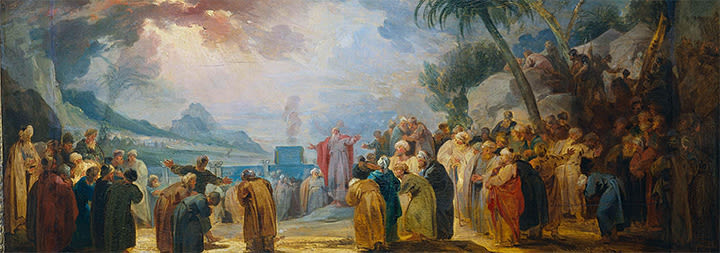
When God called Moses at the burning bush, he initially resisted, citing his speech impediment and feelings of inadequacy. Yet this very hesitation demonstrates one of the most powerful aspects of Moses' leadership and reflects what it means to be a godly leader. His awareness of his limitations and dependence on divine guidance shaped his approach to leading millions through the wilderness.
Through the plagues in Egypt, the parting of the Red Sea, and the forty years leading the Israelites toward the promised land, Moses consistently turned to God for direction. This pattern of seeking divine counsel became the cornerstone of Moses' leadership style. When faced with challenging decisions, he would enter the Tent of Meeting to commune with God, demonstrating that great leaders recognize effective leadership requires regular spiritual reflection and guidance.
His approach shows modern leaders that strength comes not from having all the answers, but from knowing where to find them. Moses' implementation of a delegated judicial system, following his father-in-law Jethro's advice, showcases his practical wisdom in leadership. By appointing capable leaders over thousands, hundreds, fifties, and tens, Moses created a sustainable organizational structure of delegation that simultaneously helped him lead the people, while encouraging the Israelites to grow closer to God and in their own abilities, preventing burnout and improving efficiency for everyone.
This ancient example of organizational management continues to influence modern leadership theories, as noted by Harvard Business Review's research on hierarchical leadership structures. The success of this system relied not just on delegation but on careful selection of leaders based on character. Moses chose individuals who feared God, were trustworthy, and hated dishonest gain.
Moses demonstrated several essential leadership qualities that remain relevant today. These principles show how biblical leaders can inspire modern professionals to serve with integrity and wisdom. Despite leading millions, Moses remained the most humble man on earth, showing that true leadership is about service rather than status. Every major decision was preceded by seeking God's guidance, establishing a model of spiritually-grounded leadership. Through forty years of challenges, Moses maintained his commitment to God's vision, exemplifying leadership endurance. Learning from Moses' approach to balancing work and family responsibilities while maintaining spiritual integrity offers practical insights for modern leaders seeking godly leadership.
David's Journey Through Leadership Challenges
David's ascent from shepherd to king began in the humble fields of Bethlehem, where he developed foundational leadership skills through protecting his flock. His early experiences facing bears and lions prepared him for greater challenges, demonstrating how everyday responsibilities shape future leaders.
This preparation proved crucial when he faced Goliath, showcasing courage that would later inspire thousands. During his years fleeing from Saul, David built a loyal following while maintaining unwavering integrity. His leadership in the caves of Adullam transformed a group of distressed and indebted men into mighty warriors.
These experiences shaped his ability to lead through adversity, a skill that would prove invaluable during his forty-year reign as king. David's leadership journey provides timeless principles for modern leaders seeking to build integrity-based cultures.
Building Trust Through Character
David's consistent display of character earned him devoted followers who would risk their lives for his cause. When three warriors broke through enemy lines to fetch water from Bethlehem's well, David's humble response of pouring it out as an offering to God demonstrated his priority of honoring the Lord above personal gain.
This action exemplifies how biblical examples of leadership often involve sacrificial decisions that inspire deeper loyalty. Even after becoming king, David maintained relationships with his advisors and showed respect for their counsel. His willingness to accept correction from Nathan the prophet regarding his sin with Bathsheba demonstrated remarkable humility for a monarch.
This transparency and accountability became hallmarks of his leadership style. His ability to unite diverse tribes into a cohesive nation showcases how authentic leadership transcends social and cultural barriers.
Leadership Principles from David's Life
David's leadership offers several key insights for modern leaders:
- Courage in Crisis: David's victory over Goliath demonstrates how faith-based leadership thrives in challenging situations.
- Emotional Intelligence: His ability to spare Saul's life twice showed remarkable self-control and wisdom in handling conflicts.
- Team Development: David's mighty men transformed from outcasts to elite warriors under his mentorship and guidance.
- Strategic Thinking: His careful consolidation of the kingdom revealed skilled diplomatic and military leadership abilities.
- Authentic Repentance: David's response to correction modeled how leaders should handle personal failures with honesty.
The successful integration of military prowess with spiritual sensitivity created a leadership model that balanced strength with compassion. Throughout his reign, David maintained his practice of seeking divine guidance, as evidenced in the Psalms he wrote. This spiritual foundation enabled him to lead with vision and purpose, even as he navigated complex political and personal challenges.
Joseph's Leadership Through Moral Excellence
Joseph's journey from Potiphar's house to an Egyptian prison exemplifies how maintaining ethical standards amid adversity shapes exceptional leadership. When faced with Potiphar's wife's advances, Joseph demonstrated remarkable moral courage by refusing to compromise his values, even though it resulted in false accusations and imprisonment. His unwavering commitment to integrity, despite the severe personal cost, showcases how biblical examples of leadership often emerge through challenging ethical decisions.
While managing Potiphar's household, Joseph's dedication to honest stewardship and ethical conduct established a foundation of trust that would later influence his rise to power. His consistent moral behavior, even in a foreign land with different cultural values, highlighted how principled leadership transcends cultural boundaries. This dedication to ethical standards, even when no one was watching, became a defining characteristic of his leadership style.
During his imprisonment, Joseph continued to exhibit exceptional leadership qualities by maintaining his ethical standards despite his circumstances. Rather than becoming bitter or compromising his values, he applied his administrative abilities to prison operations, earning the trust of both fellow inmates and prison authorities. His ability to maintain integrity during this period of testing became instrumental in his eventual elevation to second-in-command of Egypt.
Joseph's experience demonstrates how maintaining ethical standards during adversity creates opportunities for greater influence and impact. His consistent moral behavior established a reputation that reached Pharaoh himself, leading to his interpretation of dreams and subsequent promotion. This progression illustrates how integrity-based leadership often yields long-term benefits that surpass short-term advantages gained through ethical compromises.
Joseph's leadership principles demonstrate how godly leadership emerges through life's most difficult seasons. His ethical conduct in prison earned him unprecedented authority as an inmate. His unwavering moral standards, which every church leader should emulate, remained stable across vastly different circumstances. Joseph's integrity influenced Egyptian leadership practices and saved countless lives during the seven-year famine.
The transformative power of Joseph's integrity-based leadership extended far beyond his immediate circumstances, ultimately positioning him to save both Egypt and his own family during the seven-year famine. His story demonstrates how maintaining ethical standards, even in adversity, develops the character necessary for significant leadership impact. Through his example, we see how personal integrity becomes the foundation for sustainable leadership influence, principles that remain essential for today's business leaders and professionals.
Nehemiah's Prayer-Driven Leadership in Action
When Nehemiah learned of Jerusalem's broken walls, his first response wasn't to draft plans or mobilize workers. He prayed. For 52 days, Nehemiah led the monumental task of rebuilding Jerusalem's walls, demonstrating how prayer-centered leadership drives successful outcomes. His approach of combining fervent prayer with strategic action created a leadership model that balanced divine guidance with practical implementation.
Modern leaders can learn from Nehemiah's example of starting each major decision with prayer. He consistently asked God for wisdom before confronting opposition, addressing team concerns, or implementing new strategies. This spiritual foundation enabled him to maintain clarity of purpose while managing complex logistics and diverse stakeholder interests.
Nehemiah masterfully united various groups, including priests, merchants, craftsmen, and nobles, toward a common goal. He assigned specific sections of the wall to different families and groups, creating ownership and accountability while maintaining project cohesion. His organizational structure fostered collaboration while respecting existing social structures and individual strengths.
The restoration project faced significant opposition from neighboring leaders like Sanballat and Tobiah, yet Nehemiah's wisdom in handling these challenges provides valuable insights for modern conflict resolution. He maintained focus on the mission while implementing practical solutions, such as positioning guards and creating communication systems to protect workers and maintain productivity.
Before beginning construction, Nehemiah conducted a nighttime inspection of the walls, demonstrating the importance of thorough assessment before action. As a servant leader, Nehemiah worked alongside his people, sharing in their hardships while maintaining clear authority. He refused the governor's provisions to avoid burdening the people, showing how leaders can maintain influence through service rather than position alone.
Nehemiah's leadership extended beyond wall construction to address systemic issues affecting the community's well-being. He confronted economic exploitation, established fair lending practices, and restored religious observances, creating lasting social impact. The success of Nehemiah's project, completing the wall in just 52 days, demonstrates how prayer-centered, strategic leadership can accelerate the achievement of seemingly impossible goals. His legacy teaches modern leaders that combining spiritual wisdom with practical action, while maintaining unwavering focus on mission, creates lasting organizational transformation. This approach mirrors the comprehensive organizational leadership programs that prepare today's leaders for complex challenges.
Daniel's Leadership Through Adversity
In the bustling metropolis of ancient Babylon, Daniel faced challenges that mirror the complexities of today's corporate environment. Despite being thrust into a foreign culture with conflicting values, Daniel maintained his daily prayer routine, demonstrating that spiritual disciplines can coexist with professional responsibilities. His unwavering commitment to his faith, even in the face of the lion's den, showcases how maintaining spiritual practices can actually enhance leadership effectiveness and decision-making capabilities.
According to Barna Group research on faith in the workplace, many Christian professionals struggle to integrate their faith with workplace demands. Daniel's example provides a practical framework for navigating this challenge, particularly for working parents who must balance multiple responsibilities while maintaining their spiritual integrity.
Daniel's reputation for excellence and integrity earned him unprecedented influence in the Babylonian court. His approach to leadership centered on demonstrating consistent ethical behavior, which is crucial in ministry, and research from the Society for Human Resource Management shows creates stronger workplace cultures and improved organizational performance. For modern professionals, this teaches that maintaining ethical standards creates long-term credibility and influence.
When faced with dietary restrictions and prayer prohibitions, Daniel demonstrated diplomatic wisdom in finding solutions that honored both his faith and his professional obligations. He proposed alternative approaches that respected organizational requirements while maintaining his spiritual commitments. This creative problem-solving approach resonates with modern professionals who must navigate complex workplace policies while honoring their faith commitments.
Just as Daniel maintained his prayer schedule despite overwhelming responsibilities, today's Christian leaders can establish boundaries that protect their spiritual practices while fulfilling professional obligations. Studies from the Workplace Faith Foundation indicate that leaders who maintain regular spiritual practices report higher job satisfaction and improved decision-making abilities.
Daniel's story reveals that spiritual integrity and professional excellence are not mutually exclusive but mutually reinforcing. His expertise in administration and interpretation made him invaluable to successive rulers, demonstrating that faith-based leadership can drive superior performance. For those seeking to develop these leadership qualities further, pursuing an MBA with a leadership emphasis can provide valuable frameworks for integrating faith with professional advancement.
Faith-Driven Leadership: Transforming Professional Potential
The biblical leadership examples of Moses, David, Joseph, Nehemiah, and Daniel reveal a profound truth. Authentic leadership emerges not from positional power, but from spiritual integrity, consistent character, and an unwavering commitment to divine guidance.
Each narrative demonstrates how faith can be a transformative force in professional environments, offering a holistic approach to leadership that transcends cultural, organizational, and personal limitations. These timeless stories illuminate a path where spiritual disciplines and professional excellence are not competing priorities, but complementary dimensions of meaningful leadership.
By embracing principles of humble service, ethical consistency, strategic thinking, and spiritual reflection, leaders in today's world can create organizational cultures that honor both human potential and divine purpose. The journeys of these biblical figures challenge contemporary professionals to view leadership not as a series of tactical maneuvers, but as a deeply integrated practice of personal growth, spiritual alignment, and purposeful service. For those ready to develop these transformative leadership qualities, CCU's online degree programs provide the foundation for integrating faith with professional excellence.