


Dr. David Murphy is the Dean of Behavioral and Social Sciences for the College of Adult and Graduate Studies.
On the icy Christmas night of 1776, General George Washington crossed the Delaware River in one of the most famous military actions in American history. The audacity of this raid — a turning point in the American Revolutionary War — serves as a powerful model for the can-do spirit that embodied the critical American birth year of 1776 and must once again define the United States. Washington refused to be bound by the tactical conventions of his time, securing a pivotal victory that restored patriots’ confidence and saved the Revolution from near-certain failure.
America250 should be a time of grand celebration. But it must also be a time of cultural reflection and realistic self-evaluation. Our homeland faces a profound and unsustainable cultural and political impasse. If the United States is to see another 250 years, renewing our founding spirit and commitment to citizenship is essential. This renewal begins with a return to our foundational principles and a deliberate effort to pass them on to the next generation of leaders.
Uniquely American values began to emerge even before America’s July 4, 1776, birthday. In 1630, John Winthrop, the Puritan leader and first governor of the Massachusetts Bay Colony, delivered his now-famous sermon, "A Model of Christian Charity," aboard the ship Arbella en route to the New World.
In that sermon, he declared, "For we must consider that we shall be as a city upon a hill. The eyes of all people are upon us."
This simple saying, derived from Jesus' words in Matthew 5:14 — "You are the light of the world. A city set on a hill cannot be hidden" — has become a defining expression reflecting American identity.
To remain that shining light, Americans must rediscover the fundamental principles that shaped the nation at its founding in that pivotal year of independence. There are four keys to this restoration, and they already exist in the Declaration of Independence: personal liberty and responsibility, shared values, limited and responsive government, and solid moral foundations. These four fundamental American ideas are not relics of the past; they remain essential to our nation’s future and must be rediscovered as they were originally understood.
The Founding Fathers held a famously high view of both personal liberty and responsibility. The Declaration regards these rights as fundamental and inalienable, granted by the Creator rather than by government. Life, liberty, and the pursuit of happiness are so well known in today’s vernacular that the phrase has almost become a cliché, but their meaning remains foundational. These rights — and the responsibilities that accompany them — undergird our national identity and define the civic duty of every U.S. citizen. Protecting them requires a renewed commitment to the responsible civic duties of informed, involved citizenship.

Active, informed citizens will naturally work to recover shared American values. The naïve assumption that these values are self-sustaining has been thoroughly debunked. Civic virtue is indispensable to a Constitutional Republic and requires constant and intentional cultivation. Western classical ideas on virtue and liberty are discovered and preserved through religious freedom and robust civic education. America must return to the fundamentals of its Judeo-Christian heritage to restore and elevate virtue as a core expectation of U.S. citizenship.
We should resurrect the Founding Fathers’ understanding of government as a necessary evil with limited scope: to protect natural rights, maintain law and order, and defend against internal and external threats. Aware of the dangers and seductive influence of concentrated power, through constitutional design, they established a federal government limited to enumerated powers, with a system of checks and balances to prevent its abuse.
The federal government was not granted unlimited power to expand or encroach on state authority or individual liberty. The Constitution, the Bill of Rights, and the federal structure were carefully constructed to restrain power. Yet, despite these safeguards, federal and some state governments have ballooned into a bureaucracy that President Washington would neither recognize nor endorse.
A bloated bureaucracy has little incentive to respond to its citizens. The Founders established a republic rather than a direct democracy — one that derives its power from the people and is administered by officials beholden to them.
To regain trust in our national leadership and federal structure, the first step is a return to strong moral principles.
Today, however, there is widespread distrust of the U.S. federal government across the political spectrum.
To regain trust in our national leadership and federal structure, the first step is a return to strong moral principles. These foundations are distinct from shared values. While virtue denotes moral character, morality is that character in action — proper conduct grounded in religious, ethical, or natural law. The Founders built America on Judeo-Christian morality, but overwhelming evidence shows these foundations are eroding and must be restored.
America is and remains an exceptional nation — not because of its inherent superiority, but because of the enduring foundational ideals on which it was built. When Washington crossed the Delaware on that cold Christmas Eve in 1776, the world had not yet seen a nation grounded in such revolutionary and deeply rooted biblical principles.
Yet this exceptionalism that defined our nation’s first quarter-millennium is not guaranteed. It is fragile and requires constant nurturing. As the nation approaches its 250th anniversary, the path forward is clear: Audaciously return with conviction to the basics that made America great at its founding, or the union cannot survive. The mission is as critical as the one Washington faced as he led his small armada across the Delaware River.
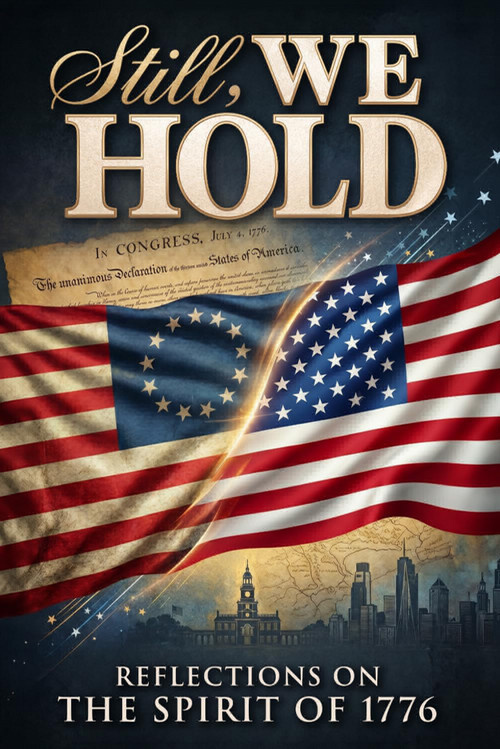
What principles shaped the American Founding — and how can they guide the nation’s future?
In this timely collection of essays from Colorado Christian University’s Centennial Institute, leading scholars, historians, and Christian thinkers examine the enduring ideas, convictions, and virtues at the heart of the American experiment. Drawing from history, theology, philosophy, and political thought, they explore the vital connections among faith, liberty, virtue, constitutional government, and the responsibilities of citizenship.