
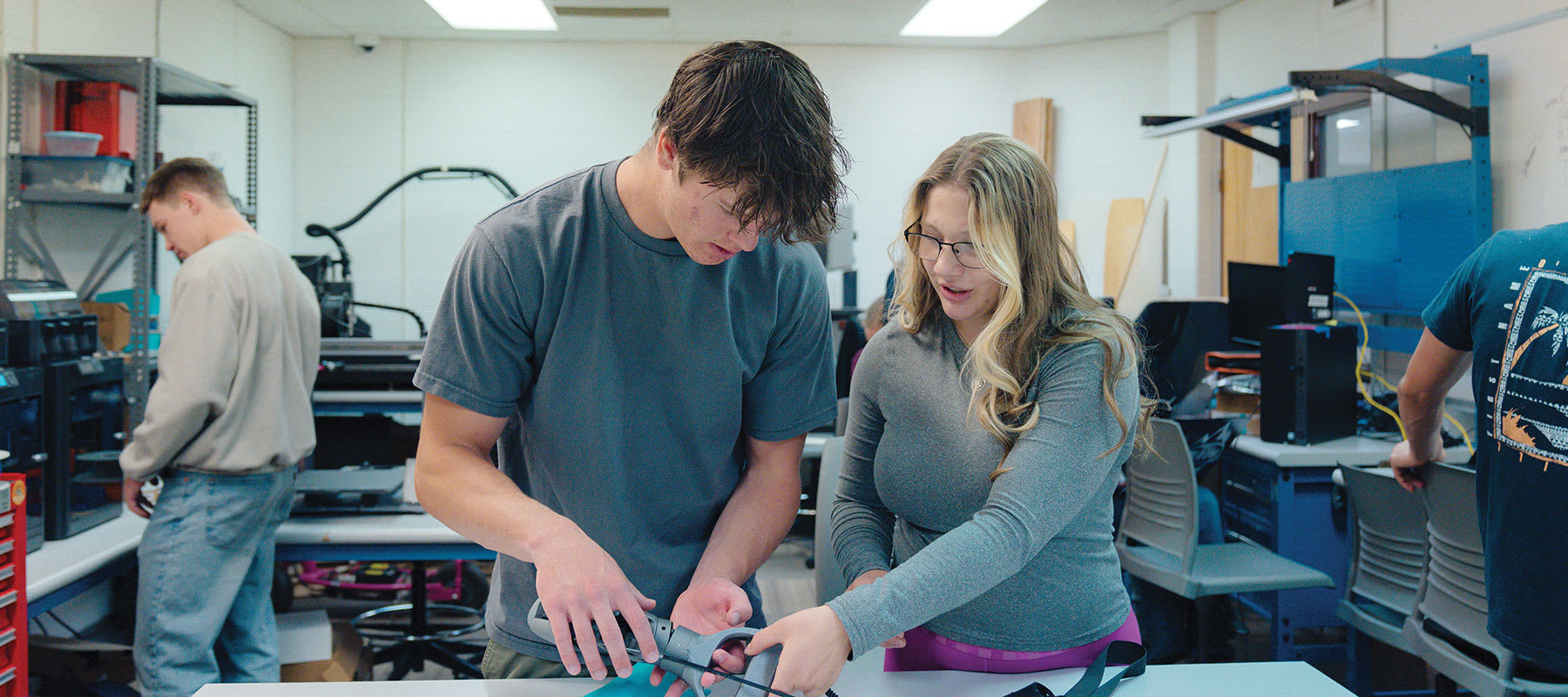
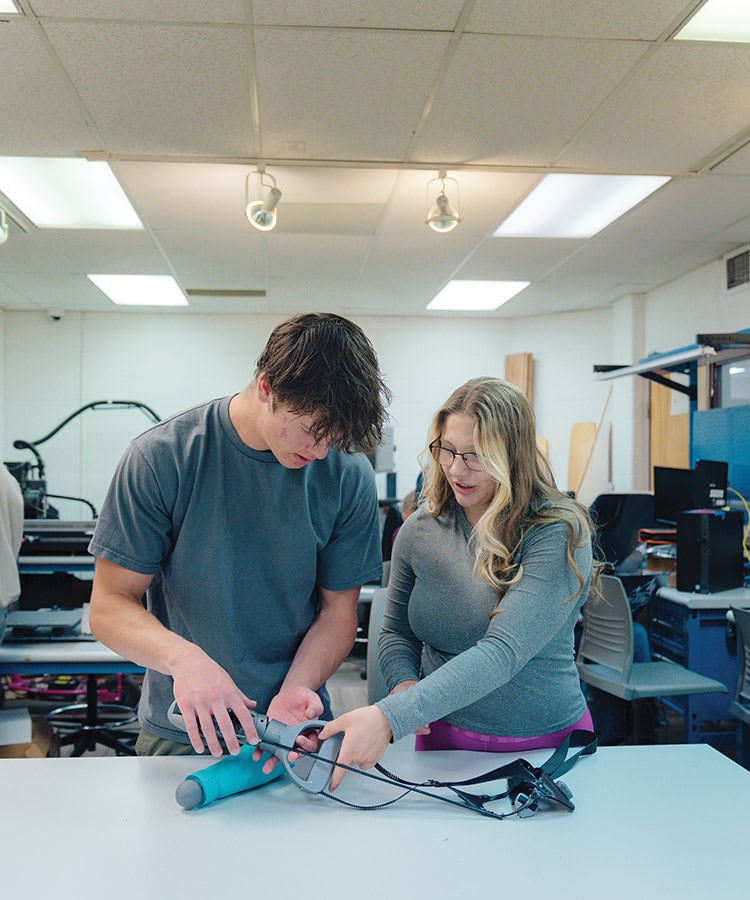
In a lab filled with computer models, prototypes, and engineering sketches, students at Colorado Christian University are creating far more than a classroom project.
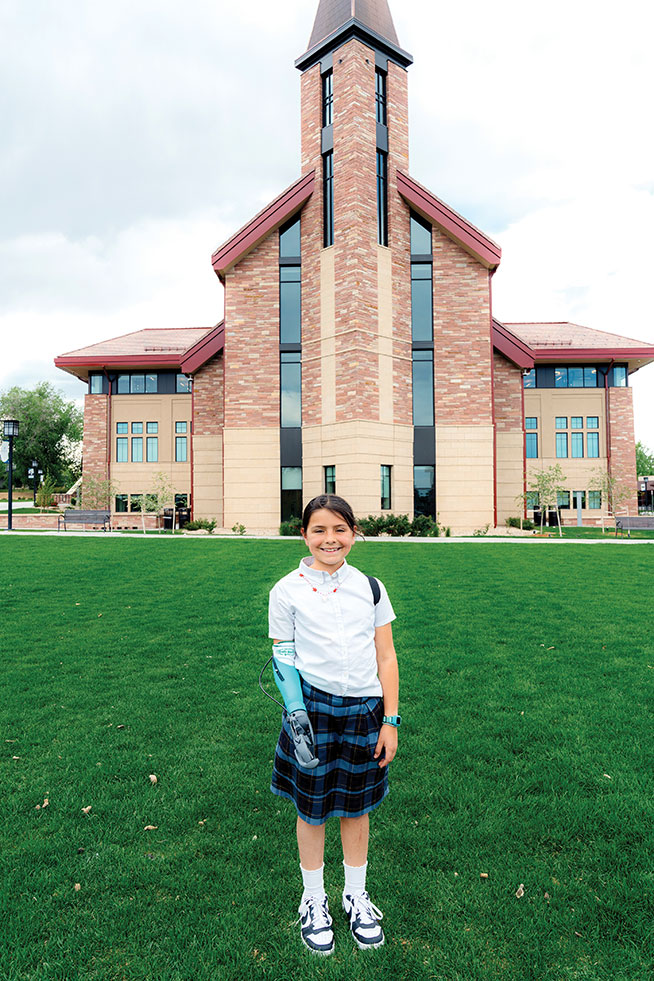
They are designing a custom prosthetic hand for a nine-year-old girl named Adie.
What began as an assignment in CCU's Computer Aided Design and Engineering Applications course as an opportunity to apply principles of 3D modeling, rapid prototyping, and engineering design to a real-world challenge quickly evolved into something with deeper value. Associate Professor of Engineering Dr. Cory Hixson introduced his students to Adie, a young girl born without a hand, transforming the project from academic exercise to personal mission.
"What began as an idea for a meaningful class project quickly became something much more personal," Hixson said. "Our students are designing something for a specific child with real needs and a real story."
After receiving permission from her parents, students met directly with Adie to better understand her daily life and how a prosthetic could support her independence. Having previously used prosthetics, she offered thoughtful perspective and valuable feedback about what had and had not worked, while also sharing what she hoped a new design could help her achieve.
Suddenly, the assignment was no longer theoretical.
No longer designing for an abstract, hypothetical user profile, students began engineering for a child who wants greater independence — to play more freely on the playground, help in the kitchen, ride a bike, kayak, and put her hair into a ponytail on her own.
For many students, the experience transformed their understanding of what engineering can be.
"As an undergrad, I didn't think I would have an opportunity like this in my first year," said Faith Ramsey, a first-year engineering student-athlete from Gilpin, Colorado. "But when the opportunity arose, it unlocked the potential for CCU engineering students to help and serve others in our community."
The project also introduced students to a significant challenge in pediatric prosthetics: growth. Children can often outgrow prosthetic devices quickly, requiring costly replacements and continual adjustments as children develop. To address this, students are exploring a modular design approach that would preserve the prosthetic's functional core while allowing for affordable component modifications over time, as Adie grows.
"The goal is to make something that adapts with her," one student explained. "We're thinking about how she plays, what she wants to do independently, and how engineering can help make those things possible."
That mindset reflects an essential lesson in user-centered design: True engineering addresses human needs, not just technical problems.
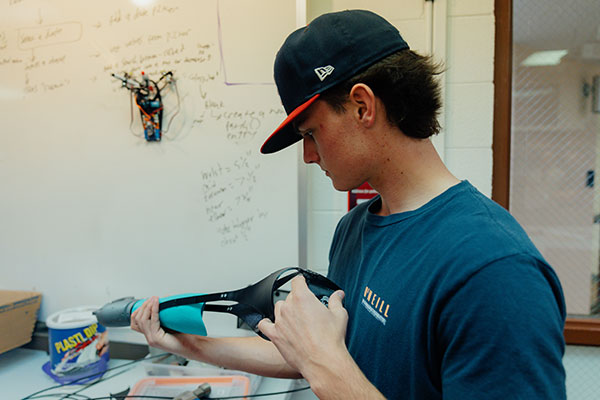
Along the way, students are gaining practical hands-on experience in CAD modeling, 3D printing, rapid prototyping, iterative testing, and collaborative problem-solving. Yet the project's most profound lessons extend outside the realms of engineering software and technical training.
"It allows me to really embrace my identity in Christ," said PJ Chambers, a first-year engineering student from Chicago. "Dr. Hixson helped me uncover my potential and realize the ideas we bring forward can genuinely make a positive impact."


That spirit of service reflects something distinctive about the CCU educational experience.
“This reflects the kind of experience we seek to cultivate in every student,” said CCU Provost Dr. David Corbin, “an education that equips them to apply their learning in ways that contribute meaningfully to the world.”
While students hope to deliver functional prototypes by semester's end, faculty see this initiative as the foundation for something even greater.
The long-term vision includes interdisciplinary collaboration across programs such as kinesiology and entrepreneurship, expanded maker initiatives, and eventually a broader University environment where students across disciplines work together to solve real-world problems for real people through innovation.
At its heart, however, this project is about more than engineering.
It is compassion in action.
It is students discovering that the skills they are developing in the classroom can become powerful instruments of service.
And it is about a little girl discovering that innovation, empathy, and faith can come together in extraordinary ways to change lives – including her own.
Where Faith and Innovation Meet
Help build a state-of-the-art Science and Engineering Center that equips the next generation of Christian scientists, engineers, and healthcare professionals to lead with excellence and advance discoveries that honor God.