


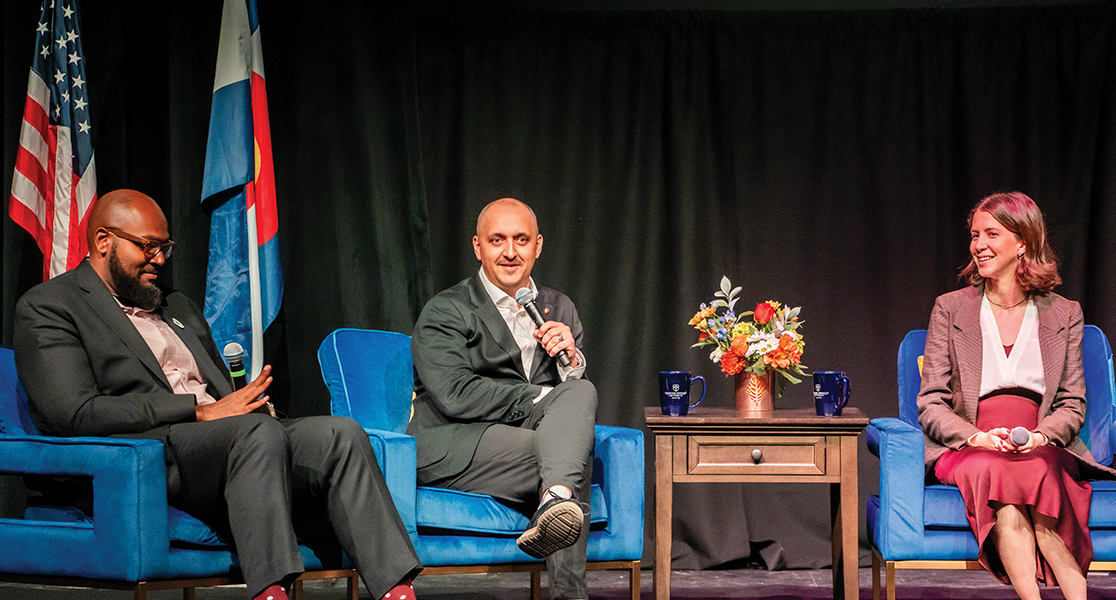
How do we, as Christ followers, engage the most transformative technology of our generation? That was the central question connecting industry innovators, students, college administrators, faculty, church leaders, and friends of the University on October 7, 2025, in the newly opened McDonald Performance Hall at Colorado Christian University’s Armstrong Center. Hosted by CCU in partnership with The Christian Post and Gloo AI, the historic summit — AI for Humanity: Navigating Ethics and Morality for a Flourishing Future — served as a groundbreaking forum for exploring the intersections of faith, technology, and the ethical and moral use of artificial intelligence.
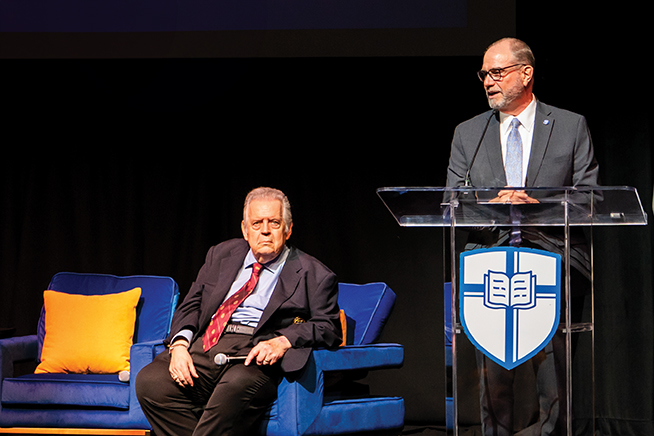
CCU President Eric Hogue welcomed the opportunity for the University to help lead these essential conversations. “We’re educating our students to lead the culture and not be led by it,” he explained in a recent interview.
“We believe that every advancement in human knowledge is an opportunity to reflect the image of our Creator and to do so for the glory of His name,” Hogue shared during the summit’s opening session. “The question before us isn’t whether AI will shape our future — it will, whether we like it or not. The question is: Will we shape, develop, and use AI with biblical truth and moral courage?” He emphasized that the goal of the summit was to dive into the conversation — “not with fear or blind enthusiasm, but with discernment, wisdom, and hope moving forward.”
From the outset, it was evident this gathering was far more than a tech conference — it was a moment of moral reflection and a vital opportunity to consider the possibilities and responsibilities in stewarding the AI era. Hogue described it as “a remarkable intersection where ancient truth, timeless wisdom, and emerging technology form tomorrow’s innovation.”
The event brought together leading voices in both faith and tech domains, including Gloo’s Executive Chair and
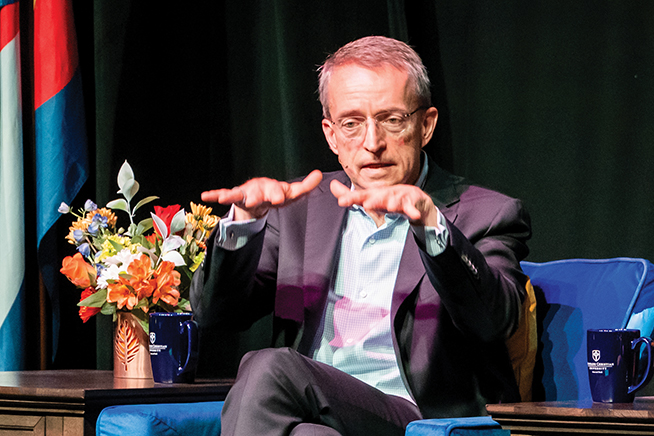
Head of Technology (and former Intel CEO) Pat Gelsinger;
For Such a Time as This
Since the release of ChatGPT only a few short years ago, the landscape of nearly every industry has shifted dramatically, compelling leaders to weigh both the benefits and challenges of rapidly evolving AI technologies. With the rise of large language models (LLMs) possessing the ability to accurately create everything from content to code within seconds — alongside a multitude of constantly expanding AI tools, systems, and platforms — the challenge now lies in organizations learning how to work with and effectively leverage these growing technologies rather than be replaced by them. For Christians, that exploration deepens into how to shape AI into a force for good — and for God.
The reality is that AI is quickly becoming a transformational powerhouse in the modern workforce, reshaping everything from research to medical procedures to best practices in education and beyond. For a university committed to preparing students as Christ-centered leaders in every field, engaging with — and helping shape — the possibilities of this new technological era is more essential now than ever.
This sense of urgency and opportunity inspired CCU and its partners to host this groundbreaking summit. “If you’re not involved, you’re not in the room,” President Hogue said, emphasizing the need for Christian leadership in the ethical and moral development of artificial intelligence. He reaffirmed CCU’s dedication to remaining on the forefront of these conversations, stating, “We are committed to equipping the next generation of Christian leaders in technology and hope to serve as a leading voice in this space.”
A Gathering of Faith, Technology, and Education
The summit brought together an interdisciplinary lineup of speakers and panelists — seasoned technology
experts, theologians, ministry leaders, policy analysts, and journalists. Headlining the event was longtime tech
executive Pat Gelsinger, Gloo AI’s head of technology.
Additional speakers at the event included:
- Michael Arena, Ph.D., Dean of the Crowell School of Business at Biola University
- Richard Land, executive editor at The Christian Post
- Justin R. Lester, pastor, author, educator, and strategist
- James Poulter, international speaker and expert in AI, innovation, and digital transformation
- Annie Chestnut Tutor, policy analyst with The Heritage Foundation’s Center for Technology and the
Human Person.
Together this distinguished group of Christian thought leaders from diverse backgrounds represented a cross-
section of AI’s influence throughout society — unified with a common message that Christians can — and must — play an active role in shaping the future of AI. During the panel, Poulter expressed a sense of urgency to be prepared for this new reality, reminding listeners that AI’s arrival is not gradual, but a “tidal wave” with profound implications for every social institution.
For leaders like Richard Land, AI represents not only an innovation but a profound ethical test. In his address, Land described AI as “the most significant invention since the printing press,” however, suggesting the social, cultural, and spiritual stakes could be just as high. While he stressed the need to guard against the dehumanizing tendencies of unchecked innovation, the summit’s broader message focused on potential — if developed wisely — for AI to become a powerful force for good.
In his keynote speech, Gelsinger challenged believers not to run from AI but toward it — leveraging the technology to educate, serve, and build systems infused with biblical values. He described AI as “a powerful embodiment of the Christian church,” offering tools that, when rightly stewarded, can enhance ministry, expand global outreach, and strengthen discipleship. As he spoke, Gelsinger referenced examples of organizations investing in that vision, including the event’s title sponsor, Gloo, which has been developing values-aligned AI solutions and resources that support faith-centered work and human flourishing. Rather than replacing human relationships, such tools, he noted, are designed to help mission-driven leaders reach more people, communicate more effectively, and steward their resources well. In this way, AI becomes not a threat but a means of advancing spiritual formation and meaningful service in a rapidly changing world.
Others at the summit echoed this vision, arguing that when grounded in biblical truth, AI can support genuine
human flourishing — improving access to education, strengthening ministry effectiveness, deepening personal spiritual growth, and offering new forms of service to others. While the summit acknowledged the challenges and the need for appropriate guardrails, it ultimately framed AI as a tool — not an end in itself — that Christians can use to better love, serve, and advance God’s kingdom.
Leading the Way Forward
The AI for Humanity summit marked a milestone not only for CCU but for Christian higher education as a whole. By bringing together Christian thought leaders and technology experts to examine both the promise and challenges of AI, the University reaffirmed what it means to take seriously both faith and innovation. Conversations that once focused narrowly around the use of AI and academic integrity now extend far beyond the classroom, reshaping research practices, instructional design, administrative workflows, admissions processes, academic publishing and more.
The summit illuminated the countless ways AI is reshaping the world our graduates will enter — and highlighted CCU’s role in preparing them for it.
Artificial intelligence, the summit emphasized, is more than a technological tool. It is a moral question, a cultural challenge, and a spiritual opportunity. Christians are urged not to retreat from this moment, but to engage it with conviction and courage. The question is no longer whether Christians should care about AI. The question is: When will we start helping build it?